
The Story of Seanamarena: How Basotho Heritage Meets Modern Streetwear
In Southern Africa, a blanket is rarely just a blanket. It carries status, marks a life stage, and is given at the moments that matter most — births, weddings, initiations, funerals. Few designs carry that weight as visibly as the Seanamarena.
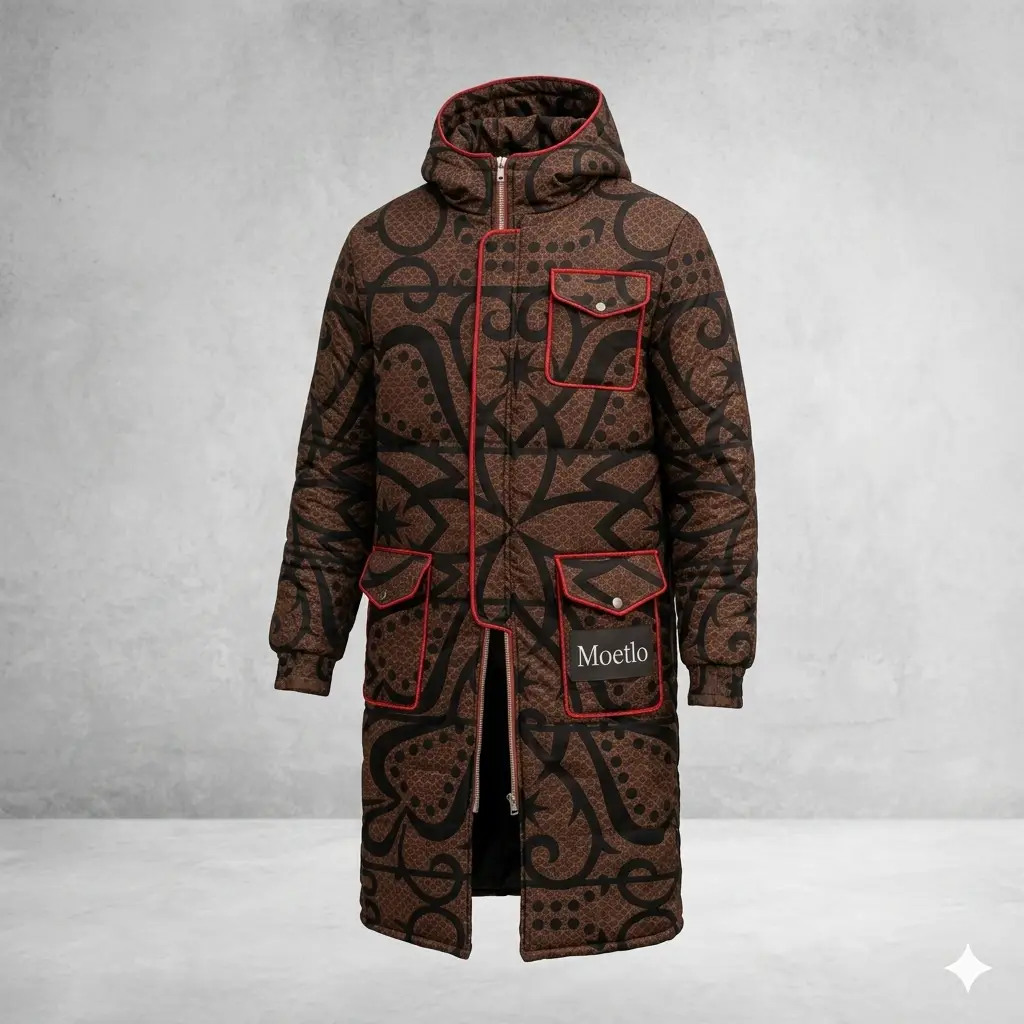
This guide covers where the design came from, how to read its patterns, and how we reworked it into a longline coat you can wear every day. If you are here to shop rather than read, start with the Seanamarena Blanket Longline Coat.
Where did the Basotho blanket come from?
The blanket entered Basotho dress in the nineteenth century. King Moshoeshoe I, the founder of Lesotho, was presented with a wool blanket by a British trader recorded as Mr Howell, and adopted it in place of the animal-skin kaross he had worn until then. By 1860 the skins needed for karosses were increasingly hard to source, and by 1876 Moshoeshoe I had arranged production of blankets made specifically for his people.
The garment spread quickly from the king to the wider population. It has stayed there ever since, worn at every significant life event from birth to coronation.
What does “Seanamarena” mean, and how old is the design?
The name translates from Sesotho as “to swear by the Chiefs”, and is often given in English as chief’s blanket. It carries the highest status of any Basotho blanket and is associated with the king and his chiefs.
The Seanamarena design itself is more recent than the blanket tradition around it. It dates to the 1930s, and is credited to Charles Hendry Robertson, who owned a trading store in Leribe, northern Lesotho, called Seanamarena. The blanket took the store’s name. The related Chromatic design is named from Robertson’s own initials, C.H.R.
This distinction matters and is often blurred: the Basotho blanket tradition goes back to the 1860s and 1870s, while the Seanamarena pattern specifically is a twentieth-century design.
How do you read the patterns?
Three elements carry most of the visual meaning:
- The poone (corn cob). Maize is the staple crop across the region. On a blanket the corncob motif stands for fertility, wealth and prosperity.
- The stripes. The long bands running down the cloth are the design’s signature. Worn correctly the stripes run vertically, an orientation associated with growth.
- The geometric borders. The repeating framed patterns share a visual language with litema, the geometric wall decoration made by Basotho women — the same instinct for rhythm and symmetry applied to cloth.
Colourways vary widely. Deeper, richer combinations tend toward ceremonial use and lighter ones toward everyday wear, but there is no single fixed code, and usage differs by family, region and generation.
How is a traditional blanket worn?
The blanket is draped across the shoulders and fastened at the front, commonly with a pin or brooch at the neck, or secured with a belt at the waist. Men typically fasten it at the right shoulder, which leaves the right arm free to move.
The stripes should run vertically. Wearing the blanket with the stripes horizontal is widely treated as incorrect.
Why turn a blanket into a coat?
A draped blanket is a magnificent thing to wear and a genuinely impractical one for a commute. Your arms are occupied keeping it in place. It does not sit well under a seatbelt. It was never meant for an office chair.
The longline coat keeps what makes the cloth remarkable — the weight, the warmth, the pattern — and solves the practical problems. Sleeves. Pockets. Something you can wear from a morning meeting to an evening event without adjusting it every few minutes.
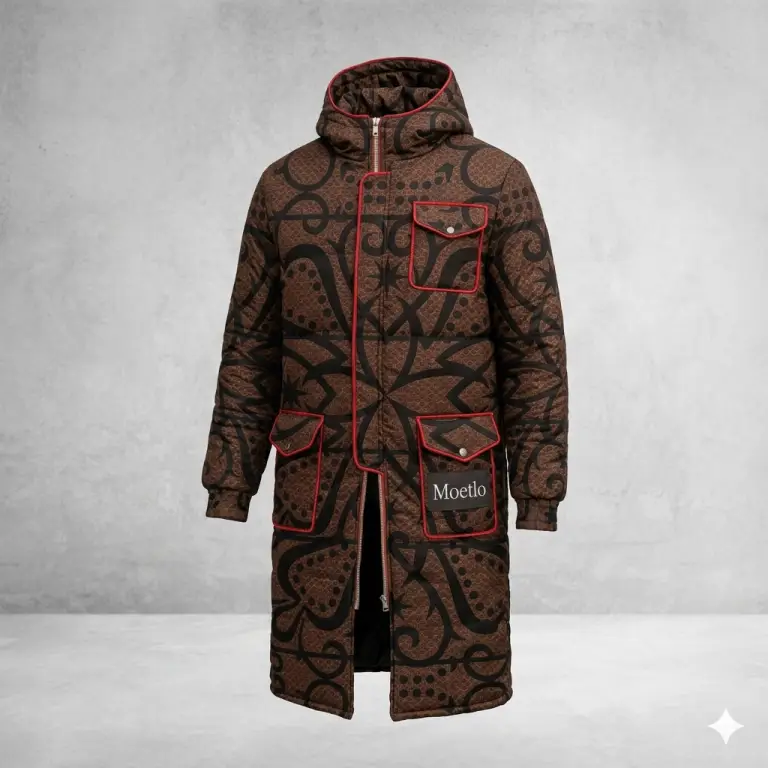
Three decisions shaped the design:
- A longline cut. The coat extends past the knee. Partly aesthetic, partly structural: the pattern needs vertical room to read. Cut it short and the stripes lose their rhythm.
- Structured inner lining. The outer cloth is heavy by design. A breathable inner lining stops that weight becoming stifling indoors.
- Deliberate panel alignment. Every panel is cut so the poone motif and stripes stay aligned across seams. This is the slowest part of production, and the reason each coat is made to order rather than held in bulk stock.
You are not just wearing outerwear. You are wearing a design with a history longer than the brand that made it.
How do you style a Seanamarena longline coat?
The coat is a statement piece. Let it lead and keep everything else quiet. Five combinations that work:
Urban minimalist
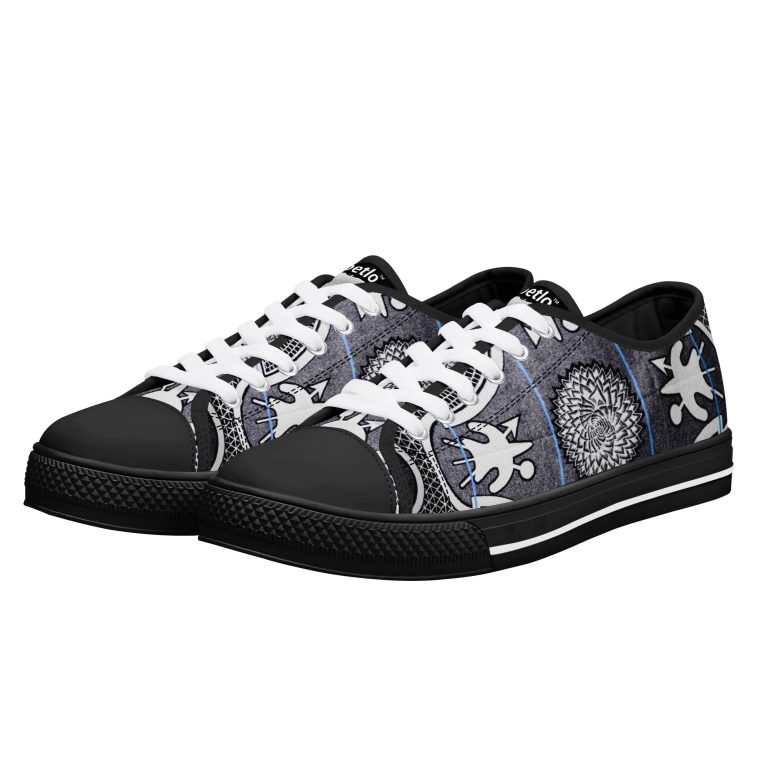
Black tapered trousers, a plain white crew-neck tee, and Kharetsa Low Canvas Sneakers. Nothing competes with the coat. The safest starting point if you have not worn a statement outer layer before.
Elevated evening
A fine-gauge turtleneck in charcoal or black, straight-leg trousers, Chelsea boots. Wear the coat open. The vertical line and clean neckline do the work.
Streetwear
Open over a graphic hoodie with raw denim and chunky sneakers. The contrast between heritage cloth and casual layering is the point — it stops the coat reading as costume.
Smart casual for work
A plain knit, dark chinos, leather sneakers or loafers. This works in most South African offices that have relaxed their dress codes, and travels well between meetings and dinner.
Cultural and ceremonial occasions
Worn closed over formal dress, the coat suits weddings, graduations and family gatherings. If the event is specifically a traditional one, take your lead from the family hosting it — a reworked garment is not always the right choice where a traditional blanket is expected.
What size should you order?
The coat is cut generously so it layers over a knit or hoodie without pulling across the back. If you are between sizes and plan to wear thick layers underneath, size up. For a closer line over shirts and light knits, take your usual size.
Because each coat is made to order, we can advise on fit before production starts. Send your usual jacket size and height on WhatsApp (+27 78 482 5516) and the studio will confirm.
How do you care for it?
- Dry clean. Take the coat to a dry cleaner rather than washing at home. Machine agitation damages both weave and printed pattern.
- Spot clean small marks. A damp cloth and mild soap, blotted rather than rubbed.
- Dry away from direct sun. Prolonged sunlight fades colour. Air dry in shade.
- Store on a broad hanger. Wire hangers distort the shoulders on a coat this weight.
- Brush, do not pick. A soft clothes brush lifts surface dust without pulling at the weave.
Common questions
Is the coat made from an actual Basotho blanket?
The coat uses Seanamarena-patterned cloth cut and tailored into a garment. It is not a repurposed heirloom blanket, and we would not cut up a ceremonial one — those are meant to stay whole and be passed on.
What are traditional Seanamarena blankets made from?
The blankets produced by Aranda Textile Mills, the South African manufacturer of the Seanamarena range, are a blend of 50% Merino wool and 50% Dralon acrylic, and measure roughly 155cm x 165cm.
Is the coat warm enough for a Johannesburg winter?
Yes. The cloth is heavy by design and the coat is lined. For Highveld winter mornings it works as a primary outer layer over a knit.
Can I wear it if I am not Basotho?
Yes. Basotho blankets have been worn across Southern Africa for generations and are widely given as gifts. What matters is wearing it with awareness of what the design means rather than treating it as a costume.
How long does it take to make?
Each coat is cut and made to order. Production plus nationwide courier delivery typically runs three to seven working days. Custom requests take longer, and the studio confirms timing when you order.
Can I return it?
Standard items can be returned within 30 days unworn and in original packaging. Custom and made-to-order pieces cannot be returned or exchanged, so please confirm sizing before ordering. See our Conditions of Sale for the full policy.
Ordering
Every Moetlo piece is made to order. That keeps quality consistent and means we produce no surplus stock destined for markdown or landfill.
- Shop the coat: Seanamarena Blanket Longline Coat
- Browse the full range: Moetlo shop
- Delivery: flat R120 nationwide across South Africa, or collect free from our store at The Mall of Thembisa
- Questions: WhatsApp +27 78 482 5516 or email info@moetlo.co.za
For more on how we approach print and pattern, see our guide to styling African print bomber and baseball jackets.
Sources and further reading
The historical and cultural details in this article are drawn from the following published sources.
- Aranda Textile Mills, Basotho Seanamarena collection — origin of the Seanamarena design in the 1930s, Charles Hendry Robertson and the Leribe trading store, the Poone corncob motif, and blanket composition and dimensions.
- Wikipedia, Basotho blanket — the gift to King Moshoeshoe I, the decline of the kaross by 1860, blanket production arranged by 1876, and the status of Seanamarena among Basotho blankets.
- Wikipedia, Moshoeshoe I — background on the founder of the Basotho nation.
- Thula Tula, Tips on when, where and how to wear a Basotho blanket — wearing conventions, vertical stripe orientation, and fastening at the right shoulder.
- Wanted Online, How the Basotho blanket became the brand identity of a nation — wider cultural context.
Cultural practice varies by family, region and generation. Where this article describes custom, it describes general convention rather than a fixed rule. If you have corrections, we would genuinely like to hear them — email info@moetlo.co.za.
Add comment